How to play Viral or Bust
Viral or Bust is a free marketing budget simulation game you play in the browser. Here is how a twelve-month campaign works, step by step, and what to watch so your brand goes viral instead of bust.
1Pick an industry
Start with £5,000 and twelve months. Choose a fashion sneaker label, a café, a beauty serum brand or a tech app. Each industry has its own customers, margins, mission and best-fit channels, so the same plan will not work everywhere.
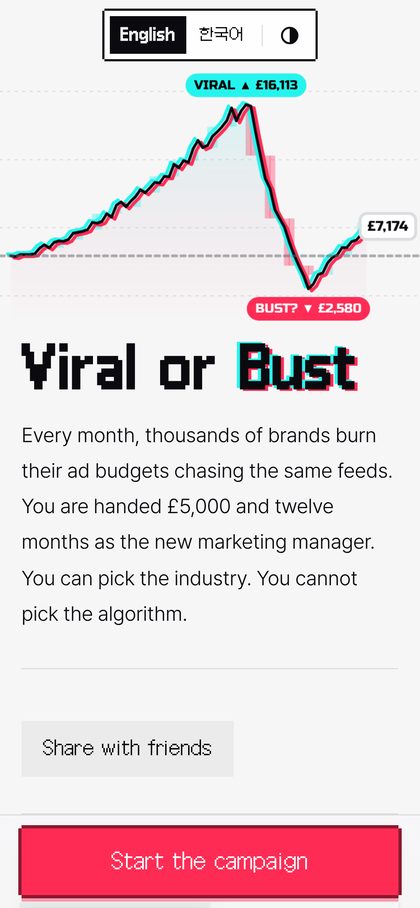
2Choose your audience and content
Tap a gender, an age group and a content style: short-form video, creator reviews, how-to and education, promotions, brand stories or memes. A fire badge marks content that is trending this month. The closer your target is to who actually buys the product, the further every pound goes.
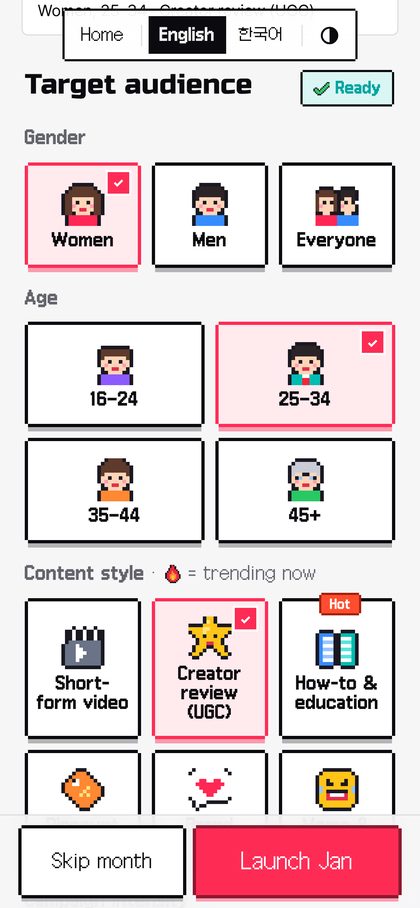
3Split your ad budget and launch
Spread the month’s budget across Instagram, TikTok, Google search ads, SEO, creator ads, YouTube and email, set the campaign intensity (safe, normal or all-in) and launch. The monthly report shows your cash now and the month’s net profit, then breaks down where every pound went.
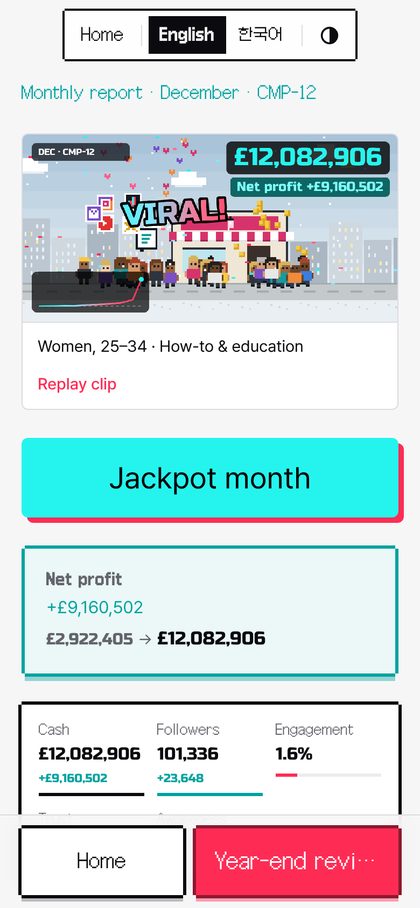
4React to surprises and events
Markets do not sit still. A celebrity reposts you, your Instagram gets hacked, a rival copies your product, investors set a revenue target or a seasonal sale opens up. Each choice costs or earns money, so read the options before you tap.
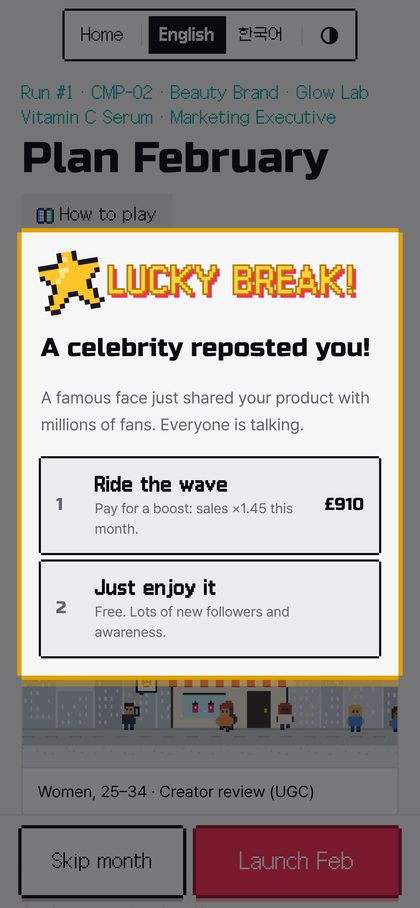
5Finish the year and get a grade
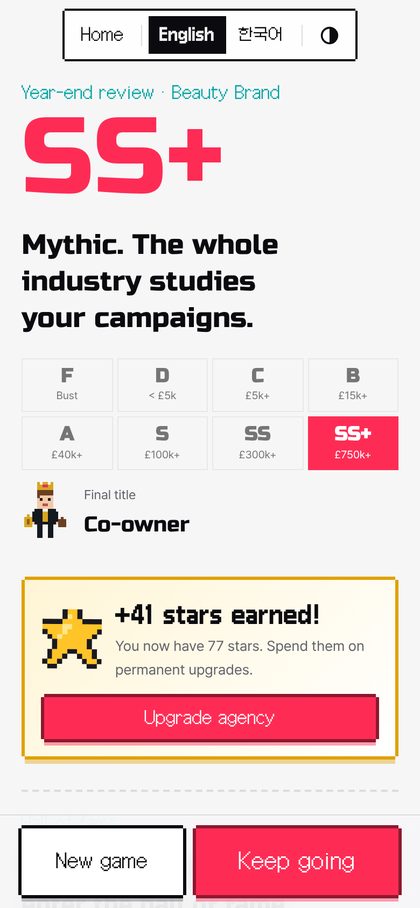
After December you get a grade from F to SS+, stars to spend on permanent agency upgrades, a growth diary video and a challenge link. Friends who open it play the exact same twelve months of news, trends and offers, so results are directly comparable.
Five tips for a better grade
- Match your audience to the product before anything else. A wrong target hurts more than a small budget.
- Switch content styles every month or two. The same style back to back builds audience fatigue.
- Use several channels. Each one saturates, so the second and third channels often earn more per pound than adding more to the first.
- Watch cash, not just revenue. Overheads grow as you get promoted, and running out of cash ends the run.
- Read the July mid-year review. It turns your own January to May data into the two changes that matter most.
How long does a game take?
A full twelve-month campaign takes about five to fifteen minutes. When the year ends you can keep going in endless mode or start a new industry.
Do I need to know marketing?
No. Every number in the monthly report links to plain-English definitions, and the marketing glossary explains each metric with a formula and an example.